
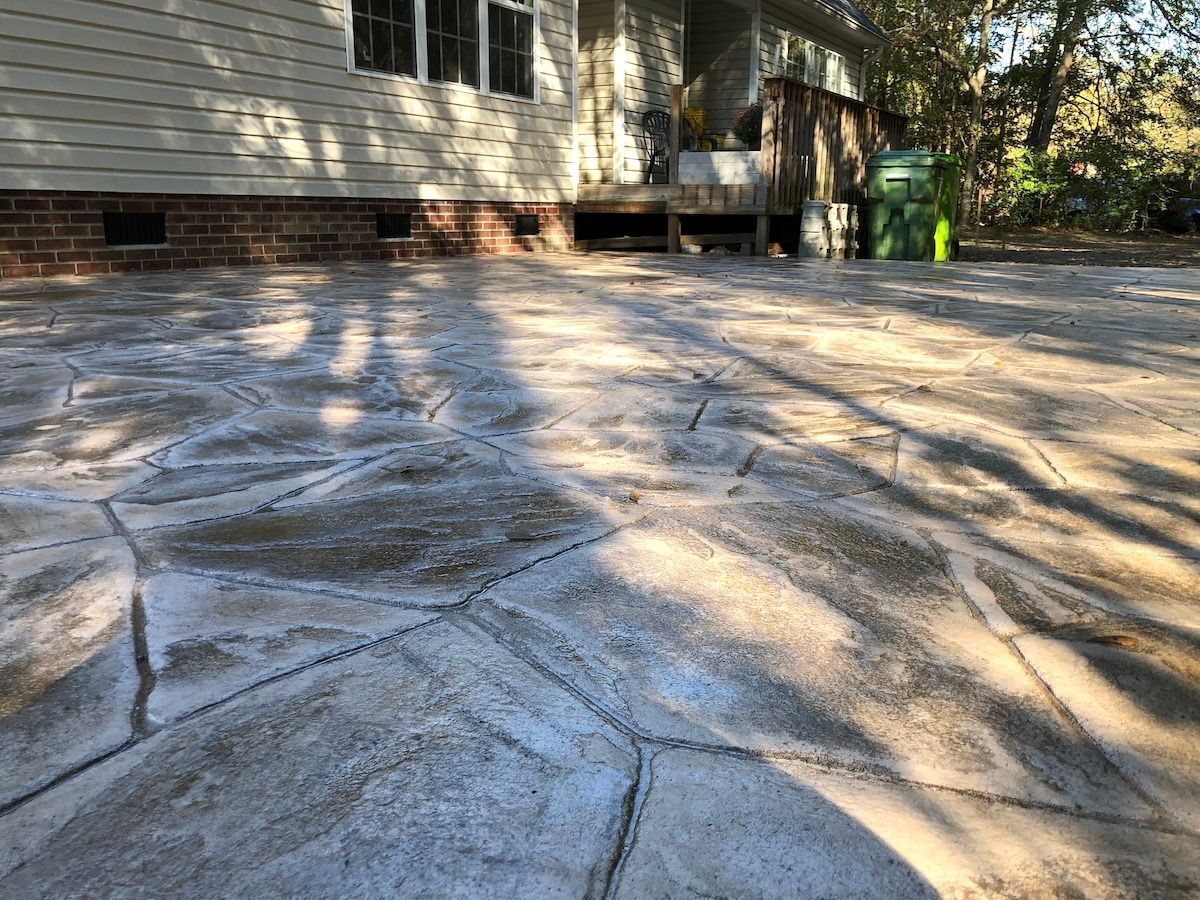
The Look of Stone. The Strength of Concrete.
Duffie Driveway Solutions installs stamped concrete for driveways, patios, and walkways across the Columbia area — hundreds of pattern and color options, built to last.
Natural stone and brick look incredible. But they're expensive, require ongoing maintenance, and can shift and settle over time. Stamped concrete gives you the visual appeal of high-end materials — cobblestone, slate, flagstone, wood plank, ashlar, running bond brick — while maintaining the strength and durability of a solid poured slab. Whether you're upgrading a plain gray driveway that's looking dated, adding a patio that complements your home's exterior, or finishing a walkway with some personality, stamped concrete is one of the best ways to add value and curb appeal without the cost or upkeep of the real thing.
The process uses the same excavation, base prep, and reinforcement as standard concrete — but with color additives mixed into the wet concrete or applied as a dry shake hardener before stamping. Rubber mats with the selected pattern are pressed into the surface while the concrete is still workable, leaving an imprint that replicates the texture of your chosen material. Release agents prevent sticking and add a subtle secondary color tone that gives the pattern natural-looking depth and variation. After curing, a sealer is applied to protect the surface from moisture, staining, and UV fading.
Schedule a consultation to review pattern samples, color selections, and how stamped concrete can be integrated into your specific project.
How Color and Sealing Protect the Pattern
Color in stamped concrete comes from two sources: integral pigments mixed into the concrete before the pour, and surface hardeners applied during stamping. Integral color runs all the way through the slab, so minor surface wear or chips don't expose gray concrete underneath. Surface hardeners add depth and variation to the top layer, and the release agent used during stamping settles into the texture lines to create the contrast that makes the pattern look like natural stone.
The sealer is what keeps the color looking vibrant and the surface protected. It forms a barrier that resists oil, water, and dirt, making the concrete easier to clean with a hose or pressure washer. We recommend resealing every two to three years — especially on driveways and high-traffic areas where vehicle tires and foot traffic cause wear. Resealing is a straightforward maintenance task, and we'll walk you through exactly what to use and when.
Stamped concrete requires the same control joints as standard slabs to manage cracking. We plan joint placement to align with pattern lines wherever possible so cuts are as inconspicuous as possible. If your design includes borders or inlays with contrasting colors, those are stamped and colored separately during the same pour. We don't include removal of old hardscape unless specified, landscaping, or ongoing maintenance like resealing.
Questions Homeowners Have About Stamped Finishes
Choosing stamped concrete involves understanding how patterns are applied, how color works, and what upkeep the surface needs over time.
What patterns are available for stamped concrete?
The most popular options we install include ashlar slate, cobblestone, running bond brick, flagstone, and wood plank. Custom patterns are available depending on mat availability. We'll bring samples to your consultation so you can see the options in person and get a feel for how they'll look on your specific project.
How is color added to stamped concrete?
Color can be mixed into the concrete before pouring as an integral pigment, applied as a dry shake hardener on the surface before stamping, or both methods can be combined for layered tones and more natural variation. The release agent used during stamping adds a secondary tone that settles into the texture lines and gives the finished surface realistic depth.
When should stamped concrete be sealed?
Initial sealing typically happens within a few days after curing is complete. Resealing is recommended every two to three years depending on traffic and sun exposure — driveways need it more frequently than covered patios. The sealer is what keeps the color vibrant and protects the surface from staining, moisture, and UV damage.
Why does stamped concrete need control joints?
For the same reason all concrete does — it shrinks as it cures and expands and contracts with temperature changes. Control joints give the slab a planned place to accommodate that movement so cracks appear at the joint rather than across your pattern. We plan joint placement carefully so they align with the design rather than cutting through it randomly.
How does stamped concrete perform in Columbia's climate?
Very well, when it's installed and sealed properly. The sealed surface resists moisture absorption and UV damage, which helps it handle humid summers and the occasional freeze-thaw cycle without deteriorating faster than standard concrete. The key is maintaining the sealer — a resealed stamped driveway or patio holds up beautifully in our climate for decades.
If you want a decorative surface that combines strength with real visual impact, let's talk pattern options, color choices, and how stamped concrete fits your project. Give us a call or request an appointment online.