
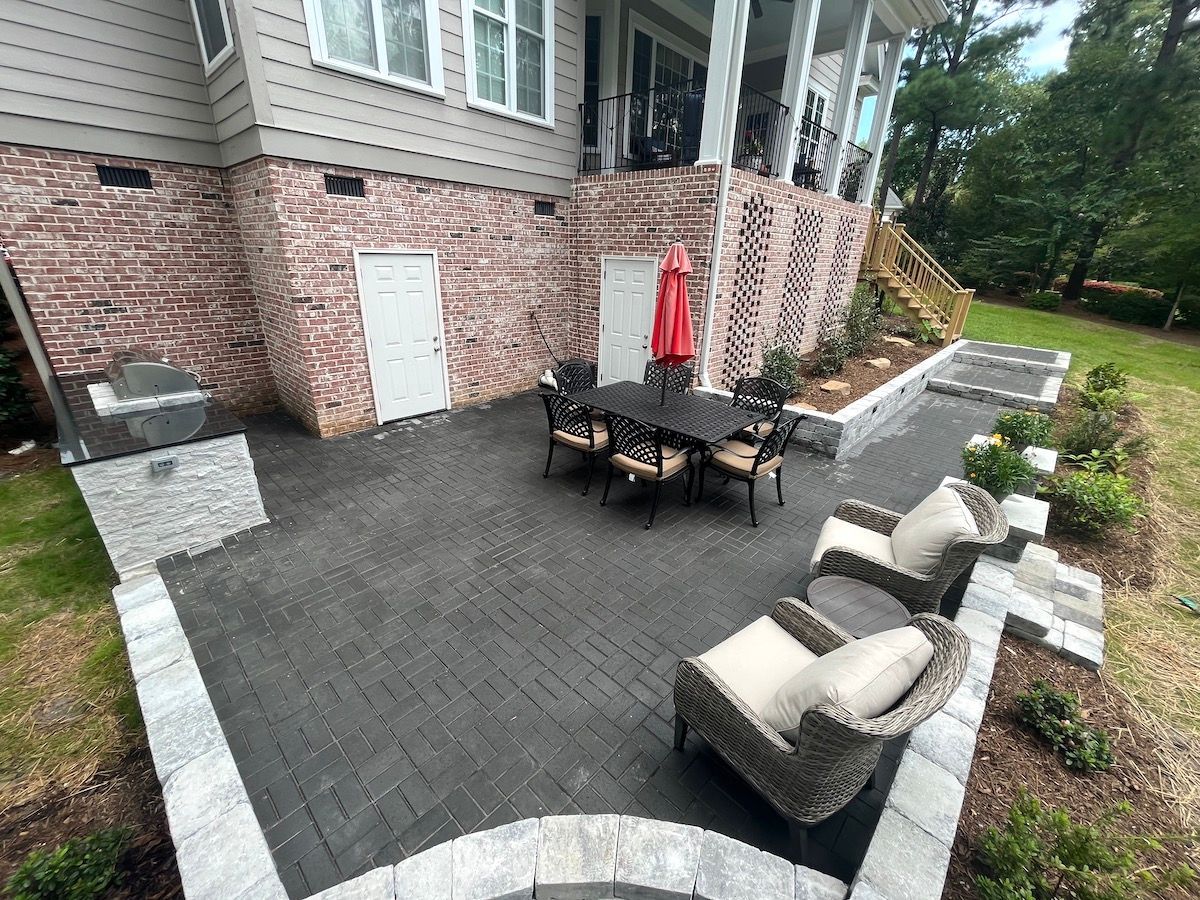
Design Flexibility. Natural Beauty. Built to Last.
Duffie Driveway Solutions installs paver patio systems for Columbia-area homeowners who want a surface that's as beautiful as it is durable.
Concrete is our foundation — but sometimes the right answer for your backyard is pavers. Interlocking paver systems give you design flexibility that poured concrete can't match: a wide selection of colors, shapes, and laying patterns, the ability to lift and reset individual units if underground utility work or landscape changes are ever needed, and a surface that manages water differently than a solid slab. If you're replacing a cracked or uneven concrete patio, or building a new outdoor entertaining area from scratch, a paver system might be exactly what you're looking for.
We install paver patios throughout Columbia, West Columbia, Cayce, and surrounding areas. The process starts with excavation and a compacted gravel base — this is where the long-term performance of your patio is determined. In Columbia's clay-heavy soil, base prep isn't optional. A layer of bedding sand is screeded level across the base, pavers are set in the pattern you chose, and polymeric sand is swept into the joints and activated with water to lock everything together and resist weeds.
Request a quote to review paver styles, color options, and how the layout will fit your outdoor dimensions.
How Base Prep Affects Long-Term Performance
Your paver patio stays level and intact because of what's happening below the surface. The gravel base is installed in lifts and compacted with a plate tamper to create a firm, draining foundation that won't shift under load. In Columbia's clay soil, we often need to excavate deeper or add geotextile fabric to prevent base material from mixing with the subgrade over time. Getting this right at the start is what separates a paver patio that stays flat for 20 years from one that develops trip hazards after the first wet season.
After installation, you'll notice joints that stay filled and pavers that stay flush with each other even after heavy rain passes through. The interlocking design distributes weight across multiple units rather than concentrating stress in one spot, which reduces cracking risk. We use edge restraints along the perimeter to keep pavers from drifting outward over time, and the polymeric sand joint fill resists washout and keeps insects and weeds out of the joints.
We don't include removal of existing structures like decks or retaining walls, grading work outside the patio footprint, or landscaping around the finished surface. If tree roots or underground obstacles are present, we'll address those during the site evaluation before any work begins.
Common Questions About Paver Installations
Understanding what goes into a paver patio helps you make better decisions about layout, material selection, and timing.
What types of pavers are available for residential patios?
We work with concrete pavers in a variety of shapes and colors, natural stone pavers, and permeable pavers that allow water to drain through the surface rather than running off. Each has its own look, price point, and maintenance profile — we'll walk you through the options and help you match the right paver to your project and budget.
How deep is the base for a paver patio?
In Columbia, a base depth of six to eight inches of compacted gravel is standard for most residential patios. Soil conditions, drainage, and expected load all play a role. Clay-heavy soil — which is common in our area — requires extra attention to compaction and sometimes deeper excavation to get a stable result.
When should the polymeric sand be applied?
Polymeric sand goes in on the same day as paver placement, or within a day of it. Once all pavers are set and the surface has been compacted, the sand is swept into the joints and activated with water. It cures quickly and bonds the joints together, so timing matters — we don't leave open joints overnight if we can help it.
Why do some paver patios settle or shift over time?
Almost always, it comes down to base preparation. Inadequate compaction, poor drainage, or missing edge restraints allow individual pavers to move over time, creating uneven surfaces and trip hazards. That's exactly why we don't cut corners on base work — it's not visible once the pavers are down, but it's everything when it comes to how the patio performs years later.
How do you maintain a paver patio after installation?
Regular sweeping, rinsing with water, and occasional joint refilling with polymeric sand are all it takes to keep a paver patio looking clean and performing well. Avoid using harsh pressure washing that can erode the joints, and reseal natural stone pavers periodically to protect against staining. We'll give you specific care instructions based on the paver type you choose.
If you want a patio that offers design flexibility and long-term performance, contact Duffie Driveway Solutions to schedule a site visit and review paver options that match your outdoor living goals.