
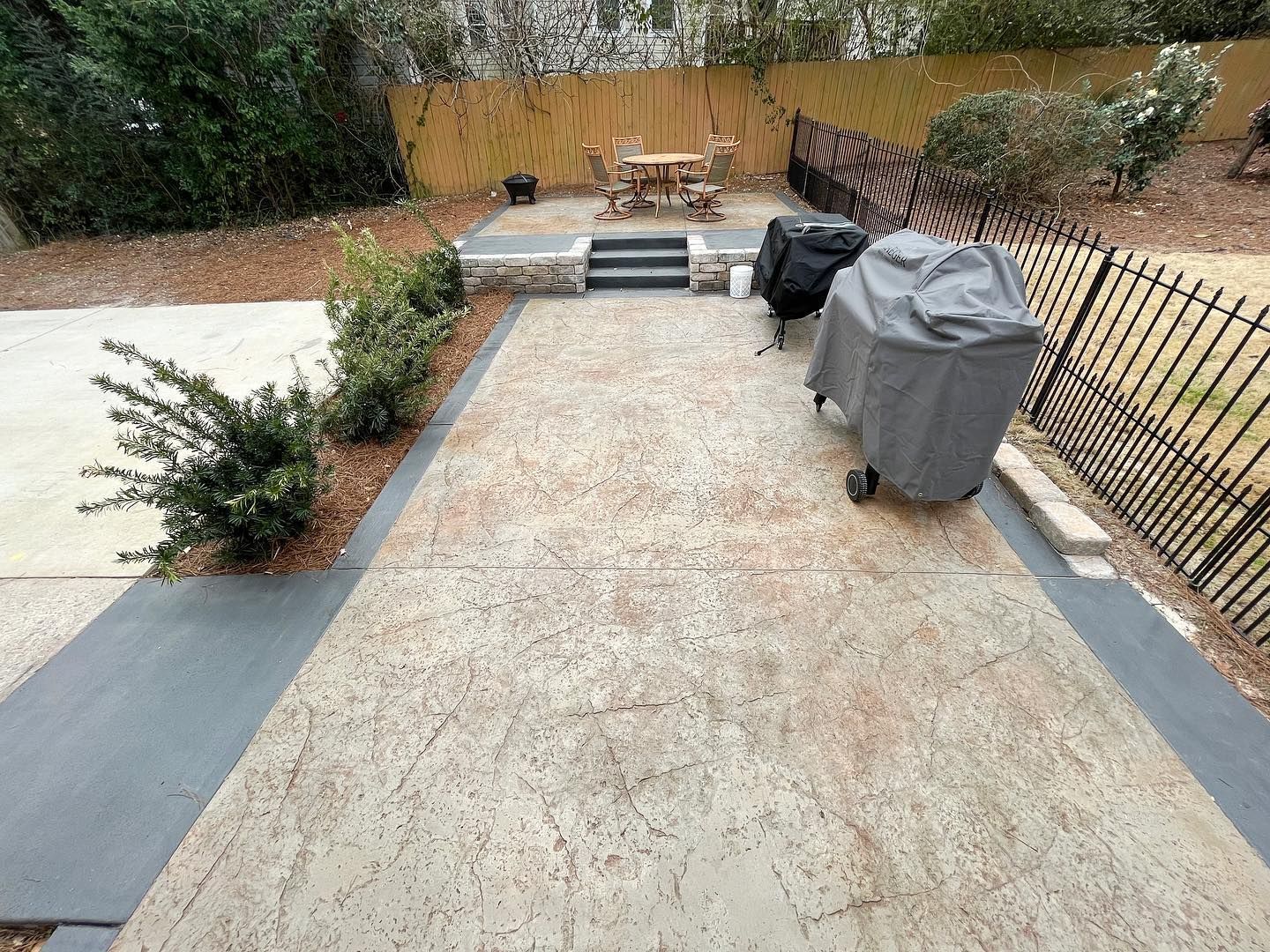
Build the Foundation Before the Flame Goes In.
Duffie Driveway Solutions pours the concrete foundations and structural bases for outdoor kitchens and fireplaces — so everything built on top of it stays level, stable, and built to last.
An outdoor kitchen or fireplace is a serious investment in your backyard — and it all starts with the concrete beneath it. A properly engineered base is what prevents settling, cracking, and movement that would compromise the masonry, countertops, and appliances built on top. Duffie Driveway Solutions designs and installs concrete foundations and structural bases for outdoor kitchens and fireplaces for homeowners throughout Columbia, Irmo, Cayce, and surrounding areas who are building permanent cooking and gathering features in their backyards.
Whether you're planning a built-in grill island, a masonry fireplace, or a full outdoor entertaining space with a sink and storage, we pour the concrete platform your project needs. Installation starts with a site evaluation to determine soil conditions, drainage, and proximity to utilities like gas lines and electrical conduit. We excavate unstable soil, lay a compacted gravel base, set reinforcement and formwork, and pour concrete thicker than a standard patio slab to handle the concentrated weight of block walls, stone veneer, countertops, and appliances. If your outdoor kitchen includes a sink or the fireplace requires a gas line, those utilities must be stubbed in before the pour — and coordination with your plumber or gas contractor needs to happen ahead of time.
Let's discuss your layout dimensions, structural requirements, and utility planning before anything goes in the ground — that's how we make sure the foundation supports your design and meets local building expectations.
Why Thickness and Reinforcement Matter for Heavy Loads
An outdoor kitchen or fireplace base is poured thicker than a typical patio because the weight is concentrated in a smaller footprint rather than spread evenly across a large area. A standard residential base is six inches thick with rebar grid reinforcement — larger structures, heavier features, or tall fireplaces may require deeper footings or a thickened edge depending on the structural design. The concrete must cure fully before any masonry work begins, which typically takes several days in moderate weather.
After the base is complete, you'll have a flat, solid surface that doesn't flex underfoot and gives your mason or builder a stable, level platform to work from. The slab is finished with a trowel rather than a decorative texture, since it will be covered by tile, stone, or other finishes once the structure is built. We coordinate the base dimensions with your overall design so countertop overhangs, door openings, and appliance placements align correctly when the project moves to the next phase.
Our scope covers the concrete foundation — not masonry construction, appliance installation, gas or electrical hookups, or finish materials like tile or stone veneer. If your project includes a roof structure, pergola, or overhead cover, footings for support posts are installed as part of the base pour if specified in the design. Any changes to the layout after the pour is complete will require additional concrete work or adjustments to the masonry plan — which is why upfront planning matters.
What to Plan Before Pouring the Foundation
Building an outdoor kitchen or fireplace foundation requires coordination with other trades and careful planning — here's what comes up in almost every consultation.
What information is needed during the design consultation?
We review the structure's size, weight, appliance layout, and utility locations to determine base thickness, reinforcement requirements, and any needed footings. The more detail you can bring to the conversation — even rough sketches or contractor plans — the more accurate the estimate will be and the smoother the coordination with your other trades.
How thick should the concrete base be for an outdoor kitchen?
Most bases are six inches thick with rebar reinforcement. Heavier structures — like a large masonry fireplace or a kitchen with multiple appliances and stone countertops — or tall fireplaces may need thicker slabs or deeper perimeter footings. We'll determine the right spec based on your design and structural requirements.
When should utility lines be installed?
Gas lines, water supply, electrical conduit, and drainage must all be stubbed in and inspected before the concrete pour. Running them afterward requires cutting or coring through the slab, which compromises the structure and creates unnecessary cost and mess. We'll flag utility requirements during the consultation so your plumber and electrician know exactly where they need to be and when.
Why does the base need to extend beyond the structure footprint?
The extra width around the perimeter provides a stable edge for the first course of block or stone. Without it, the masonry ends up sitting on the edge of the slab or on uncompacted soil, which causes settling and shifting over time. It also gives the structure room to breathe and prevents the masonry from cracking where it meets the ground.
How does weather in Columbia affect the curing process?
High heat and low humidity during Columbia summers can cause the surface to dry too quickly, which weakens the concrete and can cause surface cracking. We use curing blankets or water misting to slow evaporation and keep the surface at the right moisture level during the cure. On summer pours, this step isn't optional — it's how you get full-strength concrete in our climate.
If you're ready to add an outdoor kitchen or fireplace to your backyard, reach out to schedule a consultation. We'll walk through your foundation requirements, coordinate with your other trades, and make sure the concrete work sets your project up for success.