
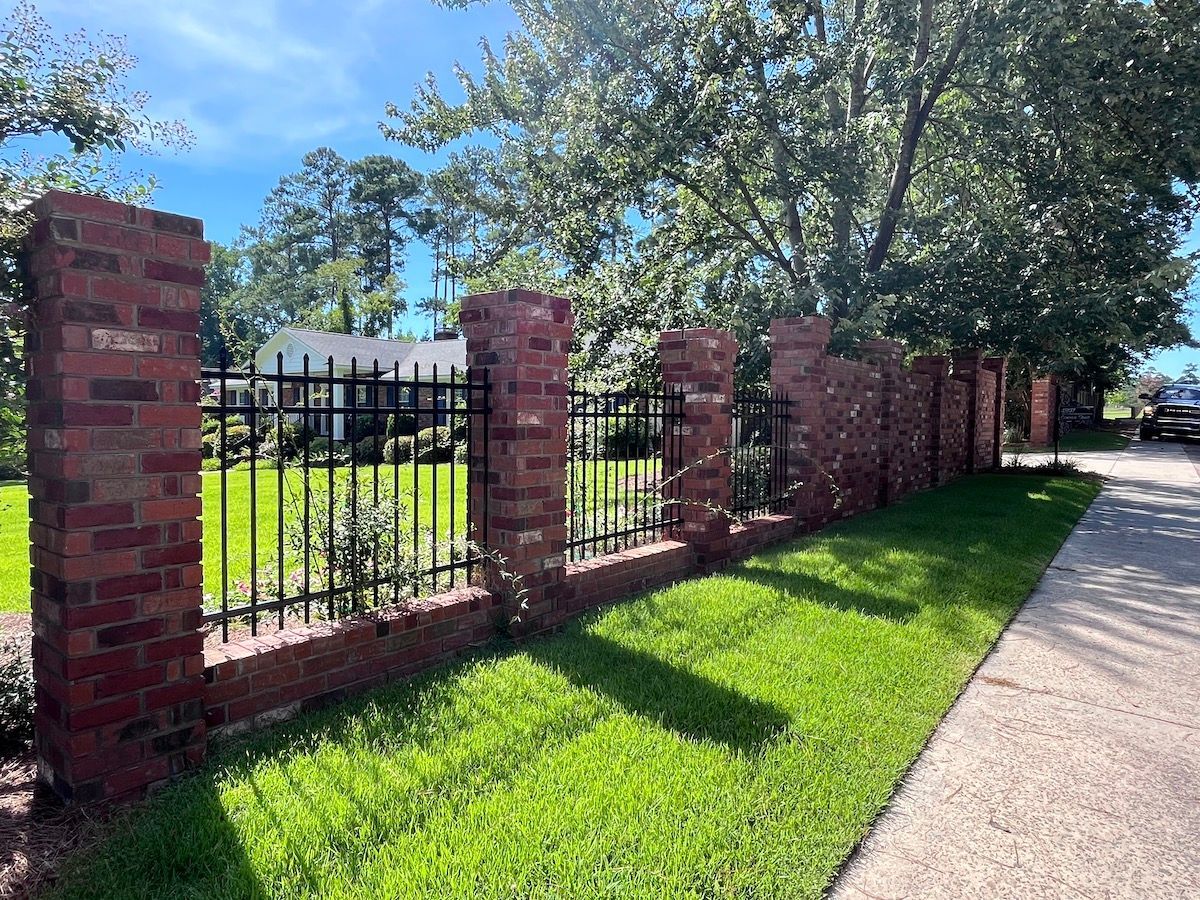
Add Structure and Style with Brickwork That Lasts.
Duffie Driveway Solutions provides brick masonry services across Columbia, SC — columns, accent walls, outdoor features, steps, and repairs that blend craftsmanship with lasting durability.
Brick masonry is where our concrete work meets its natural complement. Whether you're adding columns at the entrance to your driveway, building a raised planter to define your lawn, constructing an outdoor fireplace for the backyard, or repairing cracked and spalling brick around steps or a retaining wall — Duffie Driveway Solutions brings the same care and attention to masonry that we bring to every concrete project. We offer brick masonry services for residential properties throughout Columbia, Blythewood, Cayce, and surrounding areas where brickwork needs to hold up under the humidity and temperature swings common to our climate.
Every masonry project starts with material selection and design review. Brick color, texture, and pattern are chosen to match or complement your home's exterior. Mortar is mixed to the correct consistency and tooled for proper water shedding and appearance. Brickwork is built on a stable footing — especially important for columns and any load-bearing applications. Flashing and weep holes are installed wherever moisture can accumulate behind the brick to prevent water damage, efflorescence, cracking, and the kind of structural failure that comes from long-term moisture intrusion.
Schedule a consultation to review design preferences, material options, and how brickwork can be integrated with your existing patio, driveway, or walkway.
What Changes After the Brickwork Is Complete
You'll see well-defined edges, clean lines, and surfaces that hold up without cracking, shifting, or staining. Columns frame the driveway and create a finished entrance. Accent walls separate outdoor spaces and provide a backdrop for landscaping. Repairs restore stability and appearance to stairs, retaining walls, or chimneys that were beginning to deteriorate. Brickwork blends naturally with concrete surfaces, creating a cohesive look that ties together driveways, walkways, and patios into a finished, intentional design.
When we're doing repairs, we match mortar color and brick style to existing work as closely as possible. New construction is planned to coordinate with grading, drainage, and hardscape layout so the finished project functions the way it's intended. Brick is laid in running bond, stack bond, or decorative patterns depending on the application. Caps and coping are added to walls and columns to shed water and protect the mortar joints below. Brickwork can incorporate lighting, house numbers, or integrated planters to add functionality alongside appearance.
Brick masonry work doesn't include structural engineering for load-bearing walls, gas line installation for outdoor fireplaces, or extensive landscaping around finished features. Complex repairs involving foundation movement or serious water intrusion require diagnosis and correction of the underlying problem before brickwork can be rebuilt on top of it. Our focus is decorative and structural masonry that complements concrete work and improves the overall appearance and function of the property.
Questions About Brick Masonry and How It Lasts
Homeowners ask about material selection, mortar types, repair methods, and how brickwork holds up in the Midlands climate.
What type of brick is best for outdoor features in Columbia and surrounding areas?
SW-grade brick — severe weathering grade — is the right choice for outdoor applications in our area. It's rated for the freeze-thaw cycles, moisture absorption, and salt exposure that are part of life in the Southeast. Using the right grade of brick from the start is one of the most important factors in how long an outdoor feature holds up without cracking or spalling.
How does mortar affect the lifespan of brickwork?
Properly mixed and tooled mortar sheds water and allows slight movement without cracking — which matters in a climate with temperature swings like ours. Weak or poorly applied mortar erodes at the joints and causes brick spalling over time. Mortar selection depends on the application, and we mix it to the right consistency for each specific job rather than using a one-size approach.
When should damaged brickwork be repaired instead of replaced?
If the brick itself is sound and only the mortar has deteriorated, repointing the joints restores both stability and appearance without the cost of full replacement. If the brick is cracked, spalling, or structurally compromised, replacement is the right call. We'll give you an honest assessment when we look at the work — there's no point paying for a repair that won't last.
Why do some brick columns lean or crack over time?
Shallow footings, poor soil compaction, and inadequate flashing are the most common causes. When water gets behind the brick and into the footing — especially through freeze-thaw cycles — it undermines the base and causes movement and cracking. A column built on a proper footing with flashing and weep holes installed correctly is a column that stays plumb for decades.
What is efflorescence and how is it prevented?
Efflorescence is the white mineral deposit that appears on brick and masonry when water moves through the material and evaporates on the surface, leaving minerals behind. It's a sign of moisture intrusion — not
necessarily a structural problem, but something worth addressing before it becomes one. Proper flashing, functional weep holes, sealed caps, and correct mortar application all work together to keep water out and prevent efflorescence from forming in the first place.
We build and repair brick masonry with attention to drainage, material quality, and long-term durability suited to the Columbia climate. Reach out to discuss your project and see how brickwork can be integrated with your existing hardscape.