
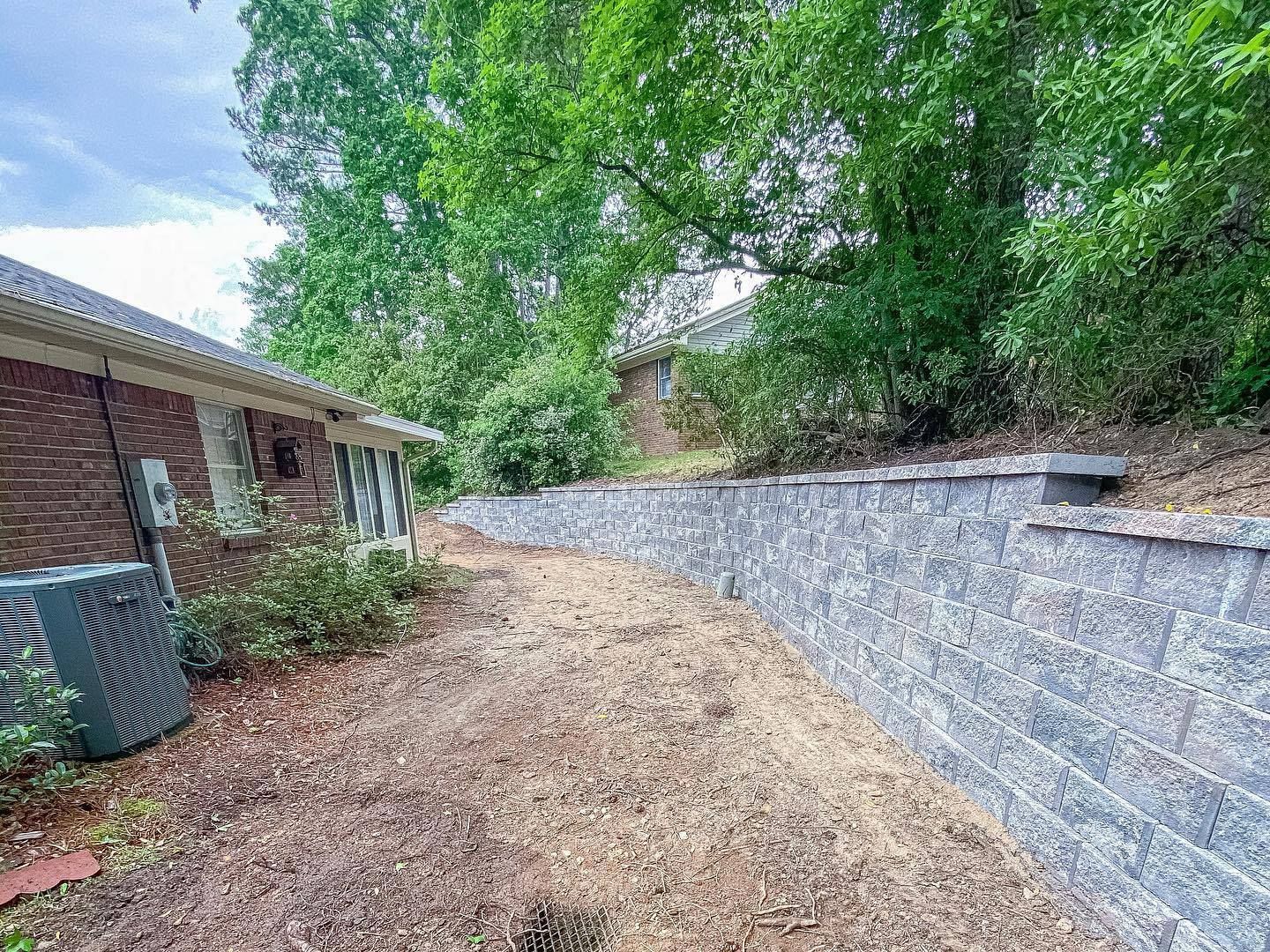
Keep Your Yard Level and Protect What Surrounds It.
Duffie Driveway Solutions builds concrete and masonry retaining walls that manage grade changes, stop erosion, and put your yard to work for you.
A slope in your yard might seem like just a landscaping challenge — but left unaddressed, it can send water toward your foundation, carve erosion channels through your beds after every rain, make mowing dangerous, and leave you with a chunk of your property that simply can't be used. Duffie Driveway Solutions builds retaining walls for residential and light commercial properties throughout Columbia, Blythewood, Lexington, and surrounding communities. These walls do more than hold back soil — they redirect water, create flat usable space where none existed before, and give you real control over how your property functions.
Every retaining wall we build has drainage engineered into it from the start — because a wall without proper drainage isn't a wall that lasts. Hydrostatic pressure builds behind an unvented wall and will crack it, tilt it, or bring it down entirely within just a few years. We assess height requirements, soil composition, and slope angle before anything goes in the ground. Walls are anchored into stable material below the frost line and backfilled with gravel so water moves through rather than collecting behind the structure.
Schedule an assessment so we can review your site's height, soil conditions, and layout — and build a wall that will actually hold up.
What Changes After the Wall Goes In
You'll see flat, usable space where there used to be only a slope. Mulch stays in the beds instead of washing onto your driveway or walkway. Water follows the drainage path built into the wall rather than pooling near your foundation or eroding your plantings. The wall itself becomes part of your landscape — it can support terraced garden beds, frame a patio area, or serve as a backdrop for ornamental grasses and shrubs. We offer concrete block, poured concrete, and natural stone options so the material can match your existing hardscape or complement your home's exterior.
We coordinate wall construction with any related grading, walkway installation, or drainage work so everything integrates correctly. The structure is reinforced to the load it needs to carry and the soil type behind it. For walls that exceed a certain height or must support a driveway or building pad above them, engineering calculations guide footing depth, wall thickness, and tie-back anchoring. Decorative caps, integrated lighting, and stepped designs can all be incorporated depending on your overall site plan.
Retaining walls are not appropriate for sites with active landslides or underground springs — those situations require subsurface drainage and soil stabilization before a wall goes in. Walls also need periodic inspection of weep holes and drainage outlets to make sure water keeps moving through the system rather than backing up and building pressure behind the structure.
Questions About Retaining Walls and How They Work
Homeowners ask about material options, drainage methods, and how tall a wall can go before additional engineering is required.
What materials are used for retaining walls?
Concrete block, poured concrete, and natural stone are the most common — each chosen based on the height needed, the load the wall must carry, the budget, and the look you want. Every option is built with internal drainage and proper footing depth. We'll walk you through the tradeoffs during your estimate so you can make the right choice for your specific site.
How does drainage work behind a retaining wall?
Gravel backfill and perforated pipe collect water that moves through the soil behind the wall and direct it to outlet points at the base. This relieves the hydrostatic pressure that would otherwise push the wall forward and cause cracking or leaning. Without it, even a well-built wall won't last — drainage isn't optional, it's structural.
When is engineering required for a retaining wall?
Walls over four feet tall, walls supporting additional weight above them — like a driveway, deck, or building pad — and walls on unstable soil typically require engineered plans and permits in the Midlands. We'll let you
know during the site evaluation if your project falls into that category and what will be needed before construction can begin.
Why do some retaining walls lean or crack after a few years?
The most common causes are poor drainage, shallow footings, and inadequate reinforcement. Water pressure builds behind the wall and freeze-thaw cycles — even mild ones — shift the structure out of alignment over time. A wall built without drainage relief or proper footing depth isn't built to last, no matter how it looks when it's first finished.
What can I plant near a retaining wall?
Low-root plants, ornamental grasses, and ground covers work well near retaining walls and are easy on the drainage system. Avoid large trees or deep-rooted shrubs — their roots can displace the wall structure over time or clog the drainage pipes behind it. We're happy to talk through planting plans that work with the wall during your consultation.
We evaluate every site individually to determine the wall type, footing depth, and drainage configuration that will hold up under local soil and weather conditions. Contact us to walk the property and talk through how a retaining wall would improve drainage and usability where you need it most.