
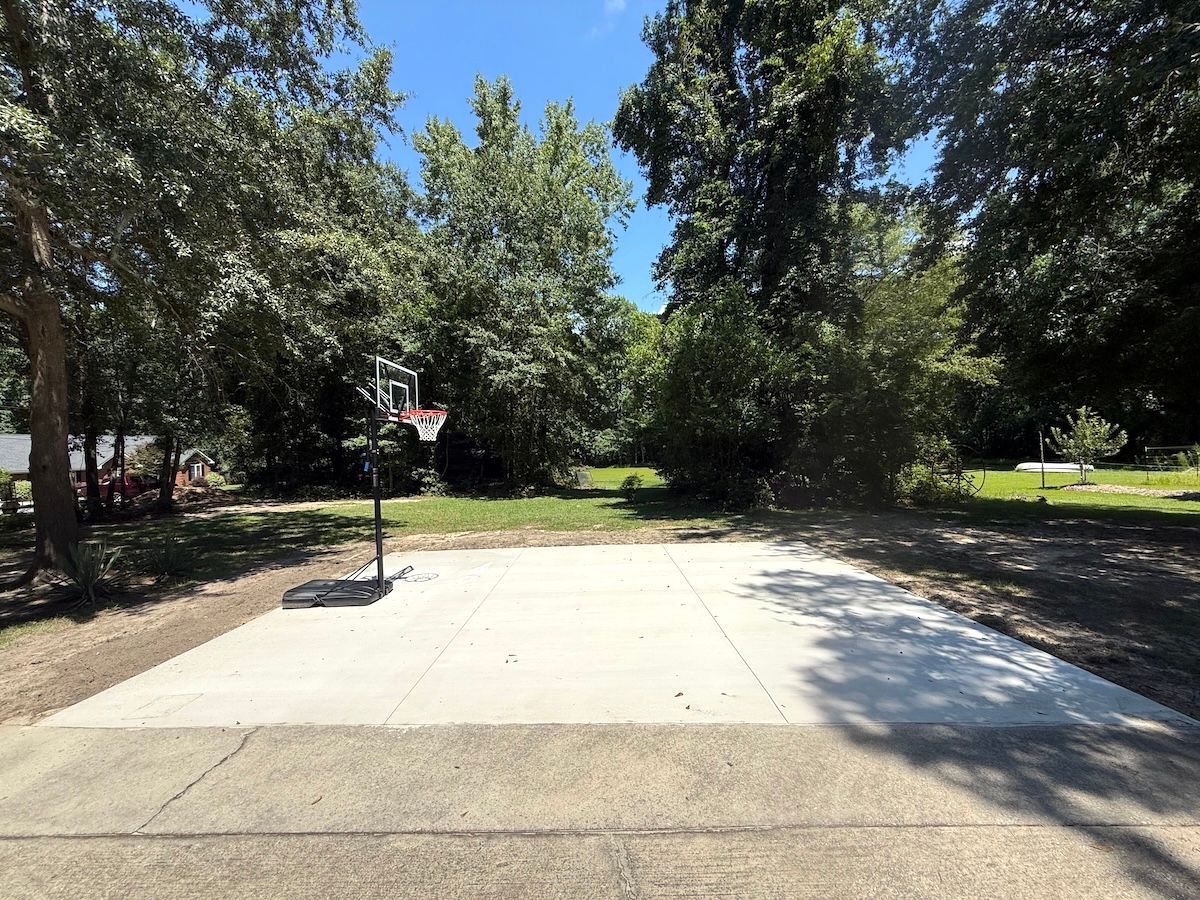
Prevent Equipment Damage and Keep Structures Level.
Duffie Driveway Solutions installs reinforced concrete pads throughout the Columbia area — for HVAC units, sheds, generators, hot tubs, and any equipment that needs a stable, level surface underneath it.
Equipment that sits directly on soil, gravel, or grass doesn't stay level for long — and unlevel equipment causes problems. HVAC condensers vibrate harder and wear out faster. Sheds shift and doors bind. Generators and compressors rock instead of sitting still. Duffie Driveway Solutions pours concrete pads sized and reinforced for the equipment or structure they'll support, throughout Columbia, Lexington, West Columbia, and surrounding areas. A properly built pad distributes weight evenly, prevents settling, and keeps moisture from reaching the underside of the equipment — which is where rust and mechanical damage start.
Every pad is sized for the specific application. HVAC units need a pad that extends far enough around the unit to allow airflow and service access. Sheds and garages need pads that extend slightly beyond the structure footprint to prevent water from pooling at the edges. Equipment pads are reinforced with rebar or wire mesh to handle concentrated loads without cracking. The base is leveled and compacted before the pour to prevent the settling that would tilt the equipment or create drainage problems.
Call us to discuss pad dimensions and schedule a site evaluation — we'll get the pad poured before your equipment delivery date.
What You See After the Pad Is Finished
You'll have a flat, stable surface that doesn't move under the weight or vibration of the equipment sitting on it. HVAC units sit level and vibrate less, reducing noise and wear on internal components. Sheds don't settle at one corner causing doors to bind and roofs to leak. Generators, compressors, and other machinery sit elevated enough to avoid groundwater contact, and the pad gives service technicians a clean, level work area for maintenance visits. Pad surfaces are troweled smooth to prevent chipping, and the surface is sloped slightly to move any drainage away from the equipment.
We pour pads efficiently — small and mid-sized pads are often completed in a single day once the site is prepared. Standard HVAC pads are four inches thick; pads for vehicles, heavy equipment, or storage of heavy materials may be six inches or more. Finish is troweled smooth or given a broom finish depending on whether the pad will be visible or hidden. Pads can be poured adjacent to existing driveways, patios, or walkways and tied into those surfaces if needed.
Concrete pads don't include removal of old equipment, electrical or plumbing connections, or landscaping restoration after the pour. If the site has poor drainage or soft soil, additional grading or base material may be required before the pad can go in — we evaluate the site and flag any prep work needed to make sure the pad stays level and stable for the long term.
Common Questions About Concrete Pads
Property owners ask about sizing, thickness, curing time, and whether the pad needs to be anchored to the equipment.
What size pad is needed for an HVAC condenser?
The pad should extend at least three inches beyond the unit on all sides — that allows airflow around the unit and clearance for service technicians to work. Larger units may require custom sizing. We'll confirm the dimensions with you based on the equipment specs before we pour.
How thick does a concrete pad need to be for a shed?
Four inches is standard for small sheds and light storage structures. Larger sheds, workshops, or structures used for storage of heavy materials — like landscape equipment, vehicles, or palletized goods — may need thicker pads with reinforcement. We match thickness and reinforcement to what the structure will actually carry.
When can equipment be placed on a new concrete pad?
Light equipment can typically be set after about 24 hours. Full load-bearing strength develops over several weeks, but most standard equipment — HVAC units, sheds, generators — can be installed within a few days of the pour. We'll give you a specific timeline based on your equipment type and the conditions at the time of the pour.
Why do some HVAC pads sink or tilt after a few years?
Almost always it comes back to soil compaction and base material. In the Midlands, clay soils expand when wet and contract when dry — a pad sitting on uncompacted clay will move with every rain cycle. Inadequate base material or a pad that wasn't sized to extend beyond the equipment footprint allows the edges to sink first. We compact the base properly before every pour so you don't deal with this problem.
What finish is best for equipment pads?
A smooth trowel finish works best for hidden pads — under HVAC units, beneath sheds, and in enclosed spaces where appearance doesn't matter and the goal is a clean, moisture-resistant surface. A broom finish adds slip resistance for pads that double as work platforms or walkways where people will be standing and moving around regularly.
We size and reinforce every pad to match the equipment or structure it will support. Contact us to confirm dimensions, review site conditions, and schedule the pour before your equipment delivery date.